
Let’s explore the story behind “the elephant that saved Rome”—a dramatic episode from the Pyrrhic War (280–275 BCE), when Rome fought King Pyrrhus of Epirus in southern Italy. Ancient writers describe a moment when an elephant in Pyrrhus’ army was wounded, panicked, and caused chaos among its own troops. While the phrase “saved Rome” is a modern flourish, the incident helps explain how Romans learned to counter a terrifying new weapon.
Chapter 1: Rome Meets a New Battlefield Threat
In 280 BCE, Pyrrhus crossed to Italy to aid the Greek city of Tarentum against Rome. He brought something Romans had never faced in large numbers: war elephants, a battlefield technology associated with Hellenistic kings who followed in the wake of Alexander the Great. Ancient sources such as Plutarch and Dionysius of Halicarnassus portray the elephants as psychologically potent—huge, noisy, and unfamiliar to Italian horses and infantry.
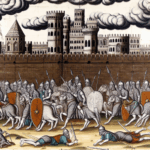
At the Battle of Heraclea (280 BCE), Pyrrhus used elephants late in the fight. Roman troops reportedly struggled to maintain formation under the pressure of both cavalry and elephants. Even if details vary by author, the broader point is widely accepted: early Roman forces lacked established tactics and equipment to neutralize elephants, and the shock value could tip close engagements.
Chapter 2: The Elephant That Turned the Tide (As the Sources Tell It)
The “elephant that saved Rome” is most often linked to accounts surrounding the Battle of Asculum (279 BCE), where Romans fought Pyrrhus again after learning from earlier defeat. Ancient narratives describe Romans experimenting with anti-elephant measures—projectiles, obstacles, and specialized carts or devices meant to frighten or injure the animals. The exact form of these devices is debated because descriptions are brief and sometimes contradictory, but the consistent theme is adaptation.
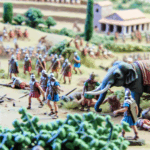
In several tellings, a pivotal moment comes when an elephant is struck—sometimes described as wounded by a spear or missile—after which it panics. A frightened elephant is not a precision weapon: it can trample friendly troops, disrupt lines, and create confusion faster than a disciplined enemy can. The dramatic image of one animal’s fear cascading into a larger rout is why later retellings highlight a single elephant as a decisive agent.
It’s important to be precise: historians treat these stories as shaped by literary motives (clear turning points, vivid scenes, moral lessons). Still, the core military reality is plausible and well-attested in other ancient battles: elephants could be formidable, but they could also become liabilities when injured, startled, or separated from their handlers.
Chapter 3: What the Episode Reveals About Roman Strength
Whether or not one specific elephant “saved” Rome, the episode illustrates a larger historical pattern—Rome’s capacity to absorb a setback and redesign its methods. By the time Rome later confronted elephants again, most famously in the Second Punic War against Carthage (218–201 BCE), Roman commanders had more institutional memory about how elephants behaved under stress and how to exploit their vulnerabilities.
Key takeaways from the Pyrrhic experience include:
- Elephants were as much psychological as physical weapons, especially against opponents encountering them for the first time.
- Countermeasures mattered: missiles, disciplined formations, and targeted attacks on handlers could turn elephants from assets into hazards.
- Adaptation was strategic: Rome’s long-term advantage often lay less in a single “miracle moment” and more in iterative learning across campaigns.
Pyrrhus himself reportedly won costly victories—hence the phrase “Pyrrhic victory.” Even when he succeeded tactically, he struggled to sustain the war strategically. Rome, able to replace losses and refine its approach, ultimately endured.
Here’s what you need to know about the “elephant that saved Rome”: it points to a real dynamic in ancient warfare—elephants could break armies, but they could also break their owners’ plans when panic set in. The story survives because it dramatizes Rome’s turning point from surprise to adaptation. In the end, the lesson is less about one animal and more about how Rome learned, persisted, and outlasted a formidable rival.